Every new shooter who looks at Schuetzen sees the same thing first: beautiful rifles with price tags
to match. This is the story of one that wasn't — an original Stevens 44½ bought online for $450, no scope, no palm
rest — and why it's exactly the rifle to start with.
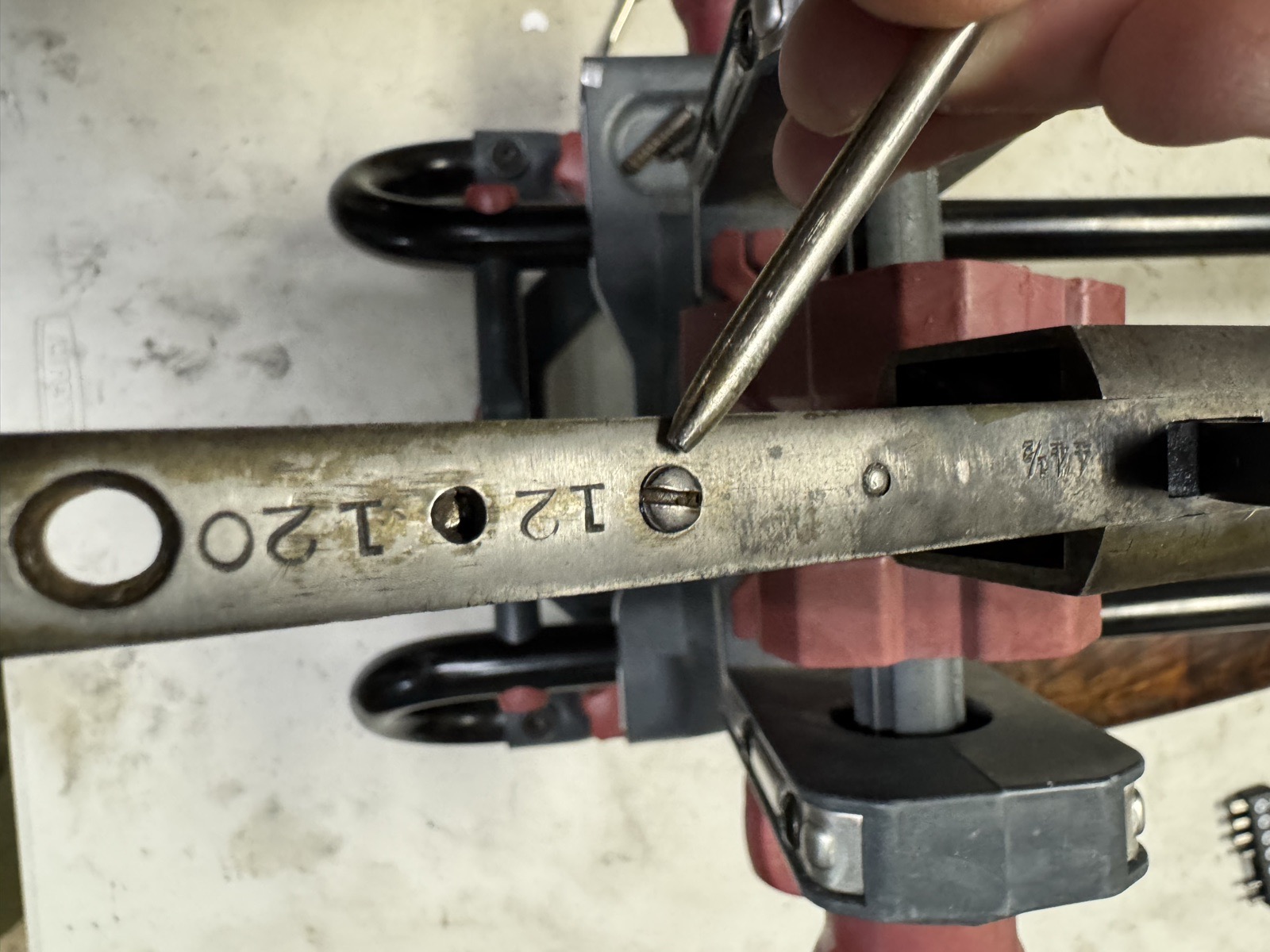
Barrel stamp · Chicopee Falls, Mass. · Ser. No. 12120
The Buy
I found this rifle online and paid $450 for it. It came as a plain rifle: no scope, no palm rest,
no iron sights at all — just the scope blocks already mounted on the barrel, waiting for a scope — and the honest wear
of a gun that had been used rather than babied. That is precisely the kind of
44½ most shooters pass over, and it is precisely the kind a new Schuetzen shooter should be hunting for. The
Schuetzen-grade examples — engraved, with the original palm rest, Swiss buttplate, and a period scope — bring many
times that money. The action underneath is the same.
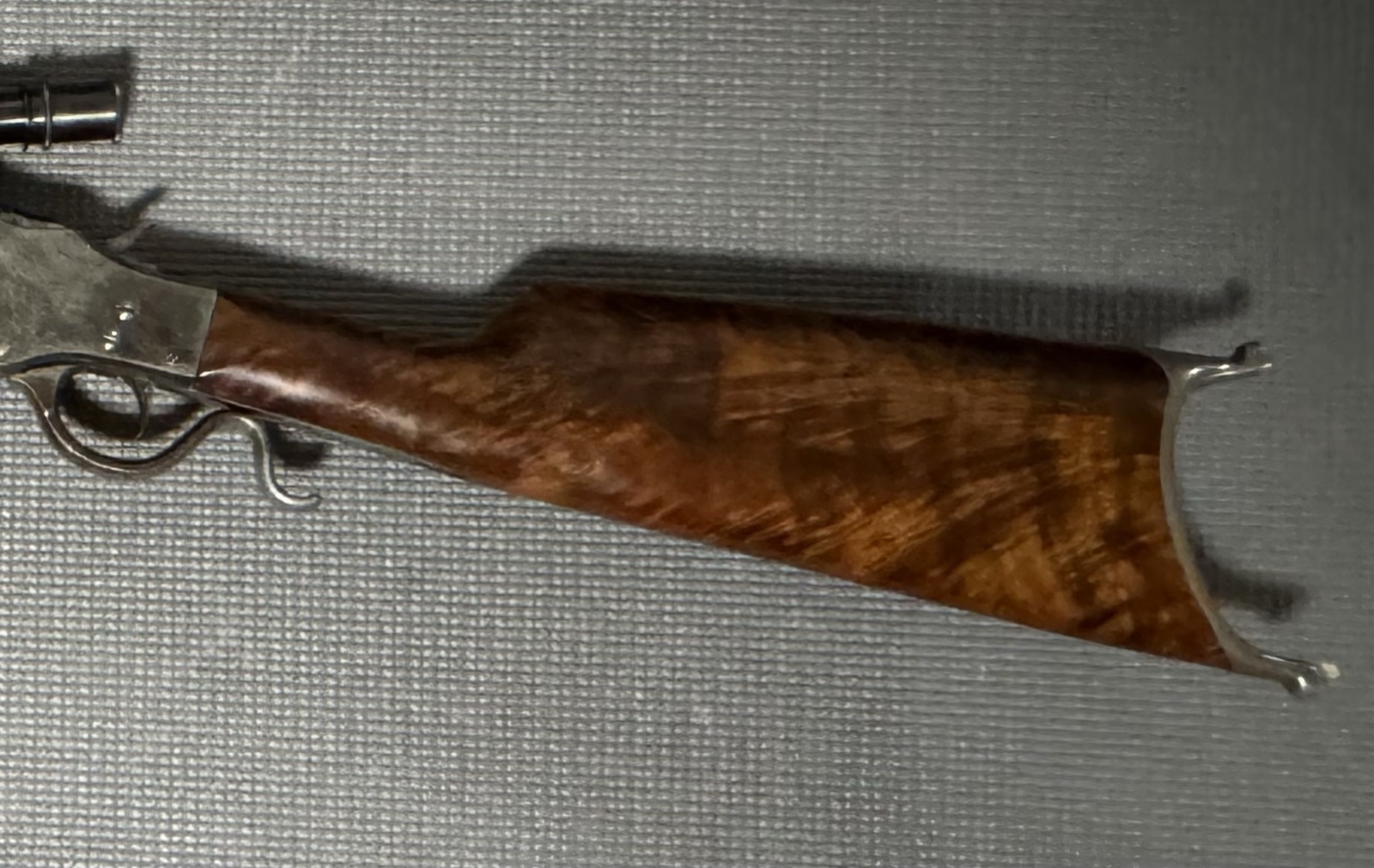
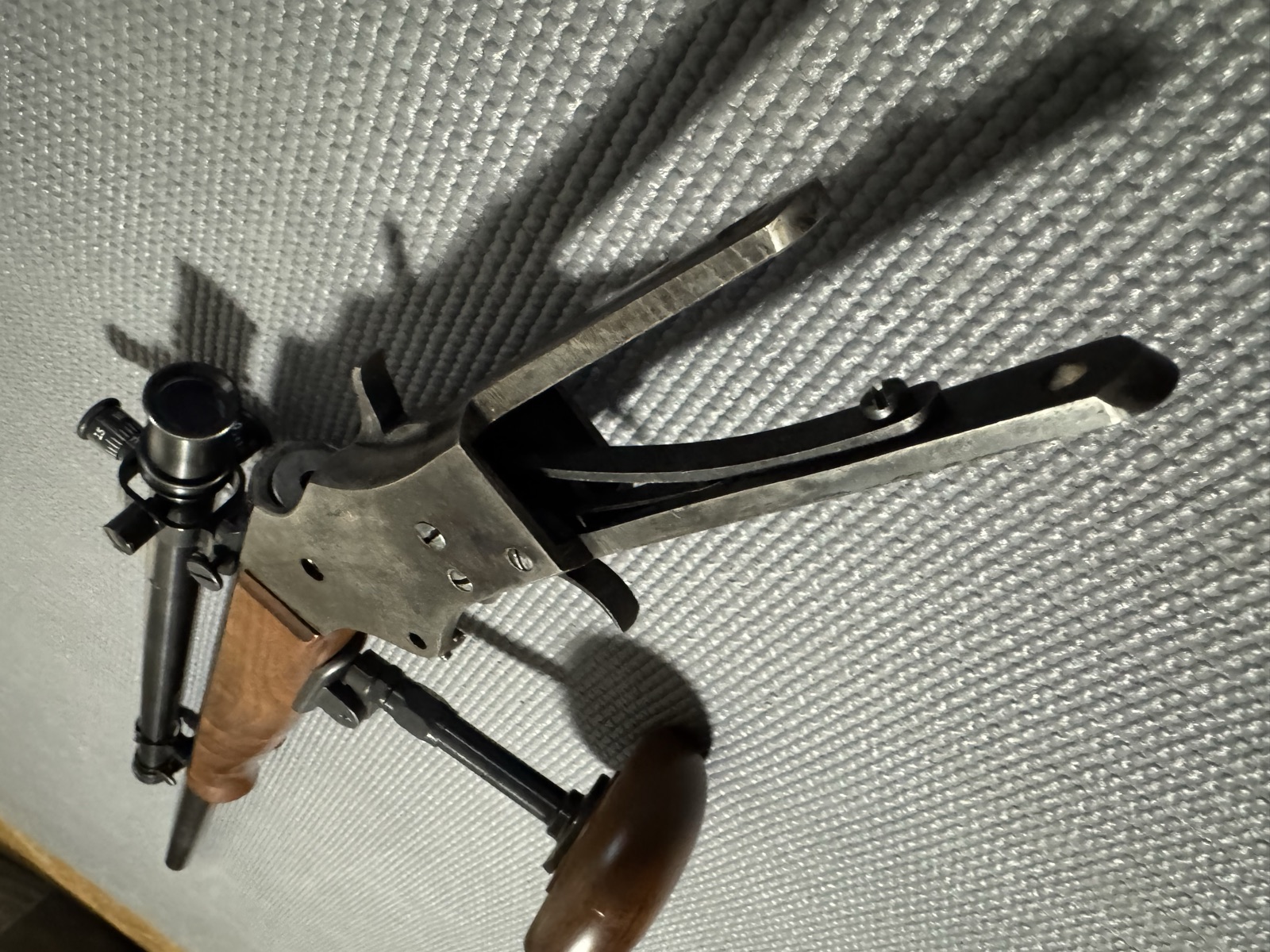
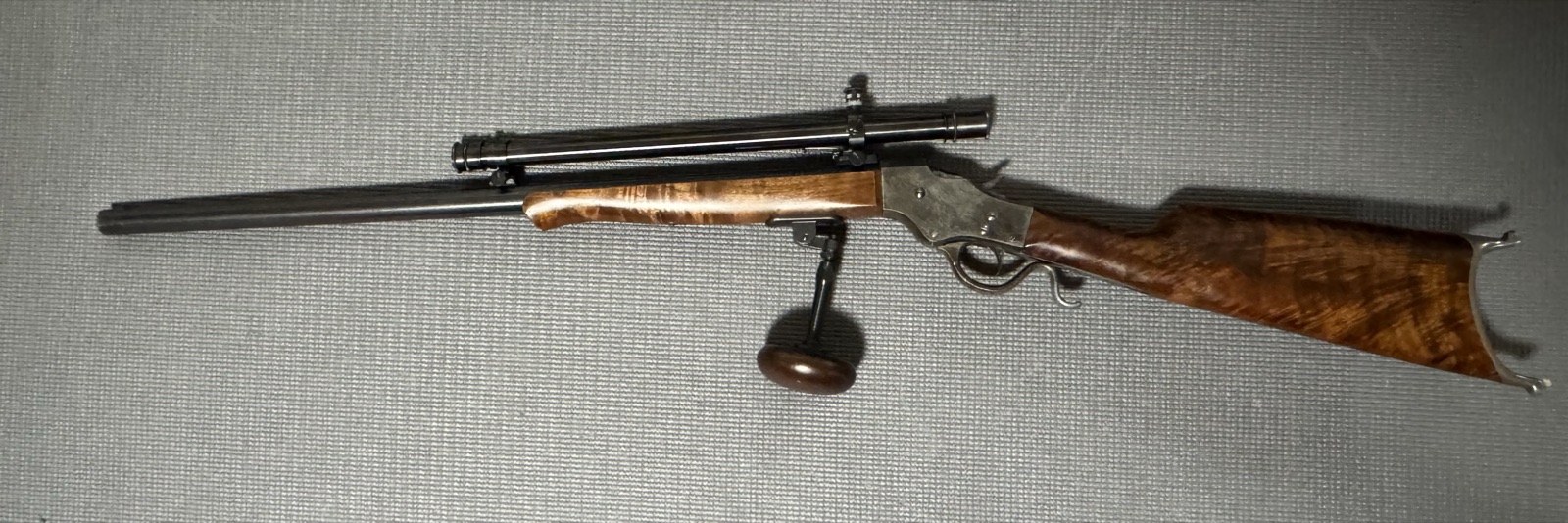
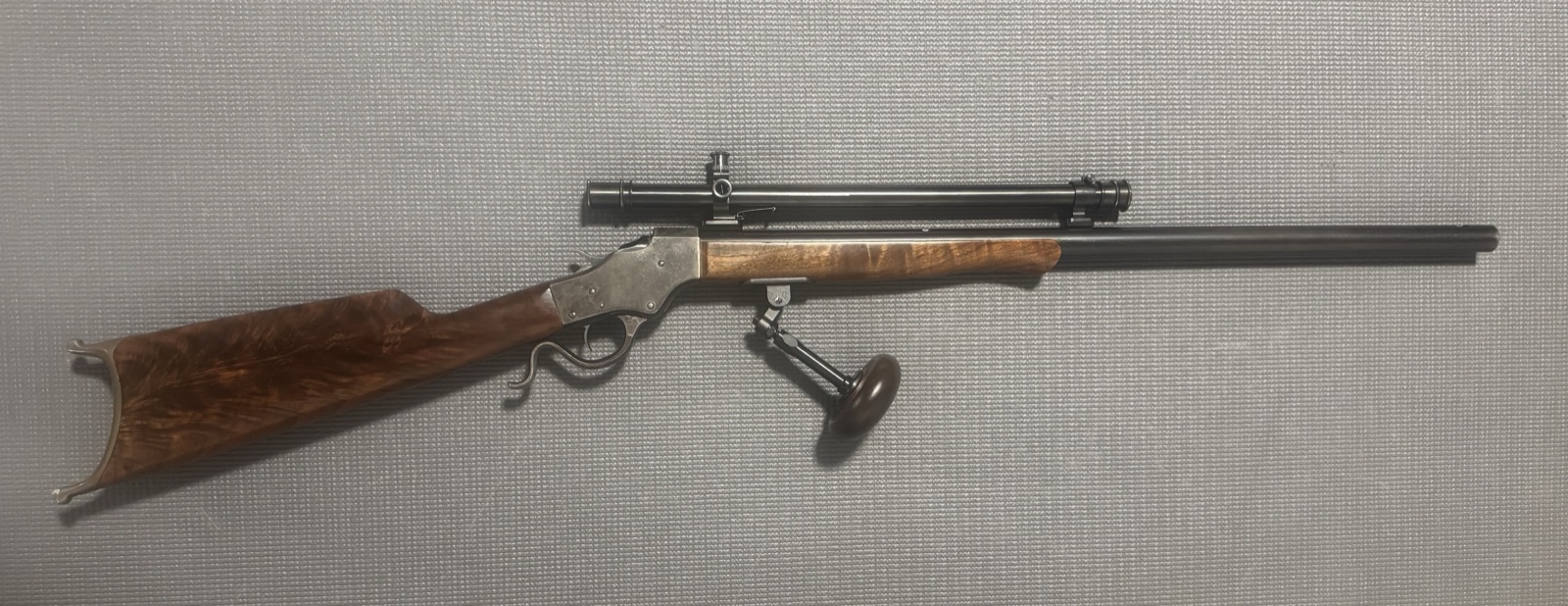
Fig. 1The rifle as it stands today. The tube scope and the palm rest were added after purchase — it came with neither. Note the heavy octagon-to-round barrel, the figured walnut, and the hooked Swiss buttplate.Fig. 2From the other side: the 44½ falling-block action, the loop lever, and the palm rest hung from its stud under the forend.
A Schuetzen rifle is the action, the barrel, and the shooter. Everything else can be added later —
and should be, one piece at a time, as you learn what you actually need.
The Rifle's Story
The House of Stevens
Joshua Stevens founded J. Stevens & Co. in Chicopee Falls, Massachusetts in
1864, making tip-up pistols. In 1886 the firm incorporated as the
J. Stevens Arms & Tool Company — the "A. & T. Co." you'll find rolled into the barrel of this
rifle. Stevens built its name on affordable, accurate single-shots for working men as much as for champions, and by
1902 its advertisements called the company "the largest producers of sporting arms in the world."
Its target rifles wore the names of the famous ranges of the day: Walnut Hill, Range,
Schuetzen.
From the 44 to the 44½
Stevens' first great single-shot was the Model 44 "Ideal" of 1894 — a light,
handy rifle whose breech block tips on a pivot, fine for black powder but no match for the pressures of the new
smokeless cartridges. The answer, introduced in 1903–04, was the Model 44½: a true
falling block, the breech sliding vertically in solid receiver walls, so much stronger that the
block tilts back as it rises to "gobble up" a cartridge that isn't fully seated. The gunwriter James Grant called it
"the best action ever made for a target rifle," and the factory's high-grade Schuetzen rifles were built on
it until production stopped in 1916.
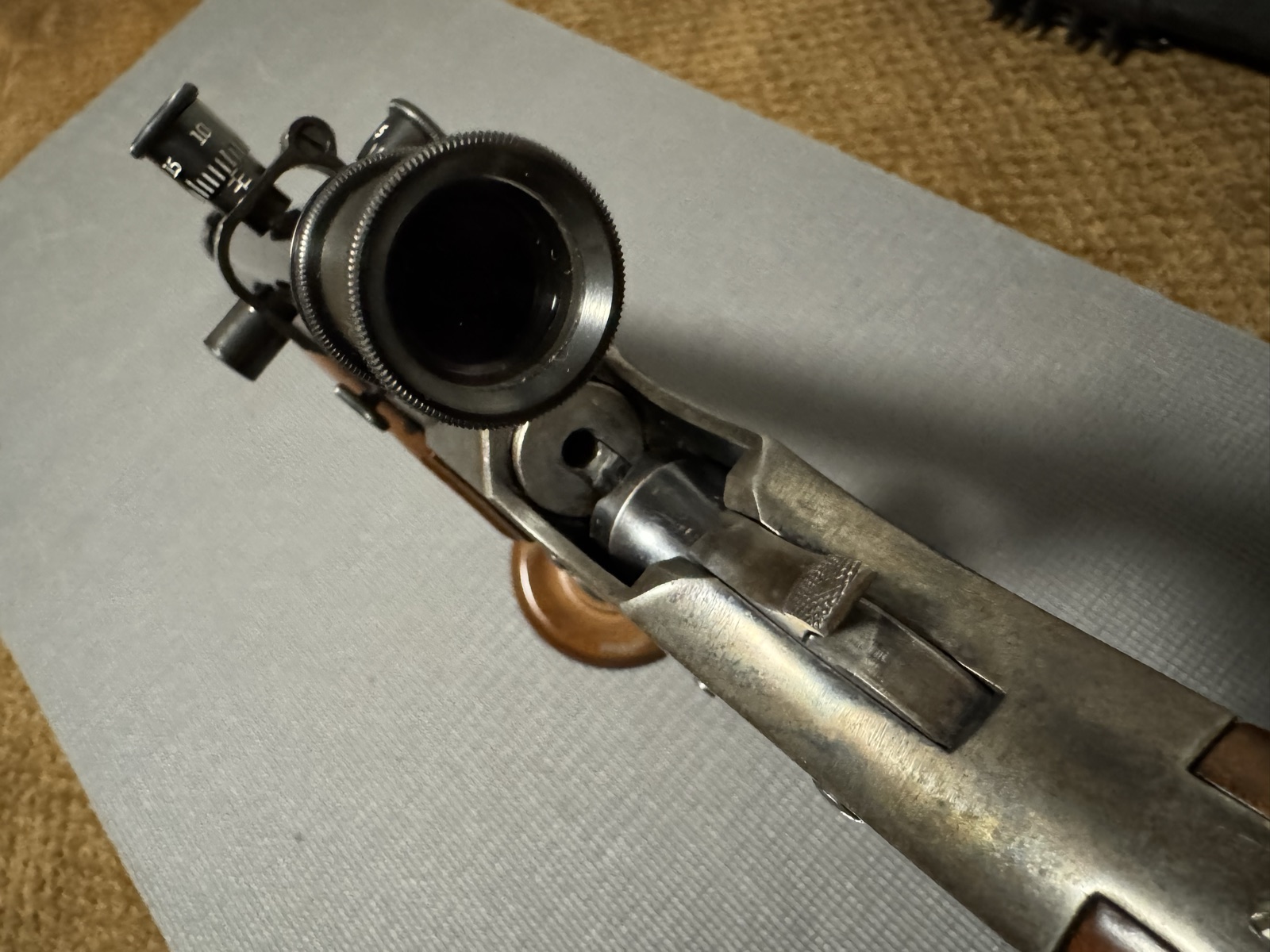
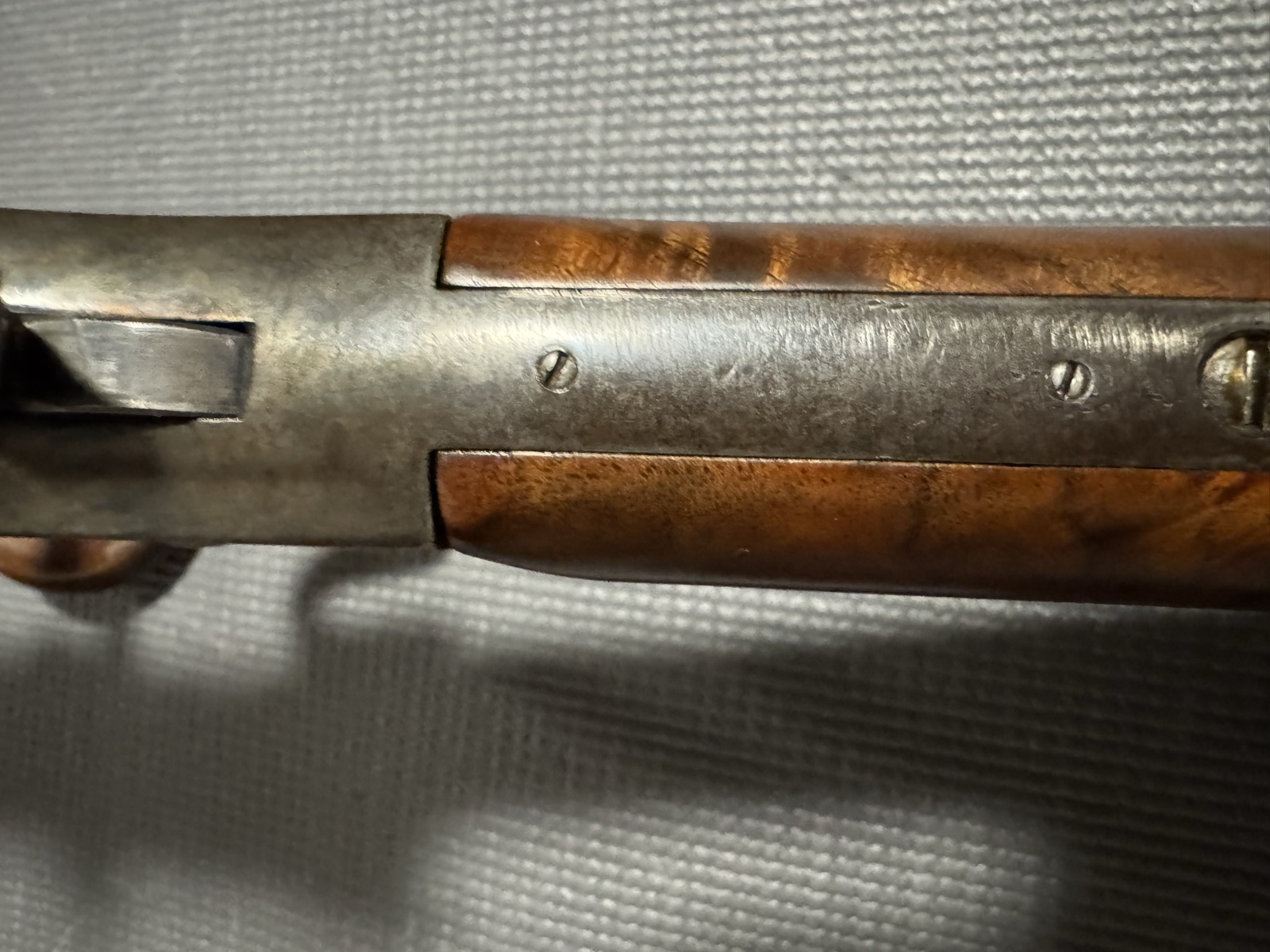
Fig. 3The top of the action: the breech block seen from above, closed in its slot between the solid receiver walls, and the upper tang running back into the wrist. (The serial number lives on the bottom of the action — see below.) One tell for a 44½ versus a 44: on the 44½ the bottom of the breech block stands proud of the frame underneath; a 44's does not.
These were the Stevens-Pope years. Harry Pope worked inside the Chicopee Falls
factory from May 1901 to the end of 1905, and the 44½ arrived during his tenure.
Whether Pope designed it is disputed: some references credit him outright, while others point out that the 44½
appeared only late in his contract and that most genuine Stevens-Pope rifles sit on the older 44 action. No primary
document naming a designer has surfaced. The company itself was sold to New England Westinghouse in
May 1915, the plant turned to wartime contract work, the "Arms & Tool" name was dropped in July 1916,
and Savage Arms bought what was left in 1920.
Which 44½ is it? The Ideal grades
Stevens sold the 44½ action under a ladder of catalog numbers. Knowing them tells you what you're looking at when
one comes up for sale — and what was stripped off it over the last century.
No.
Name
What set it apart
44½
Ideal (plain)
Rifle butt, single trigger, open barrel sights
45
Range
Swiss buttplate, tang peep sight
47
Modern Range
Pistol grip, Swiss butt, loop lever, usually double-set triggers
No. 51 features on a pistol grip — the most popular high grade
54
Schuetzen Special
Top of the line: fancy wood, wind-gauge front and vernier tang sights, false muzzle
—
Pope Model
From 1903 on the 44½: Pope sights, buttplate, palm rest, three-finger lever, muzzle-loading outfit
Chamberings seen on original 44½s include .22 Long Rifle, .25-20, .25-25, .28-30, .32-40, .33-40 Pope,
and .38-55. Which grade this rifle started life as is part of the detective work below.
When was this one built?
Stevens' factory records did not survive, so no letter can date a 44½ the way a Winchester can be dated. The rifle
has to speak for itself, and it does:
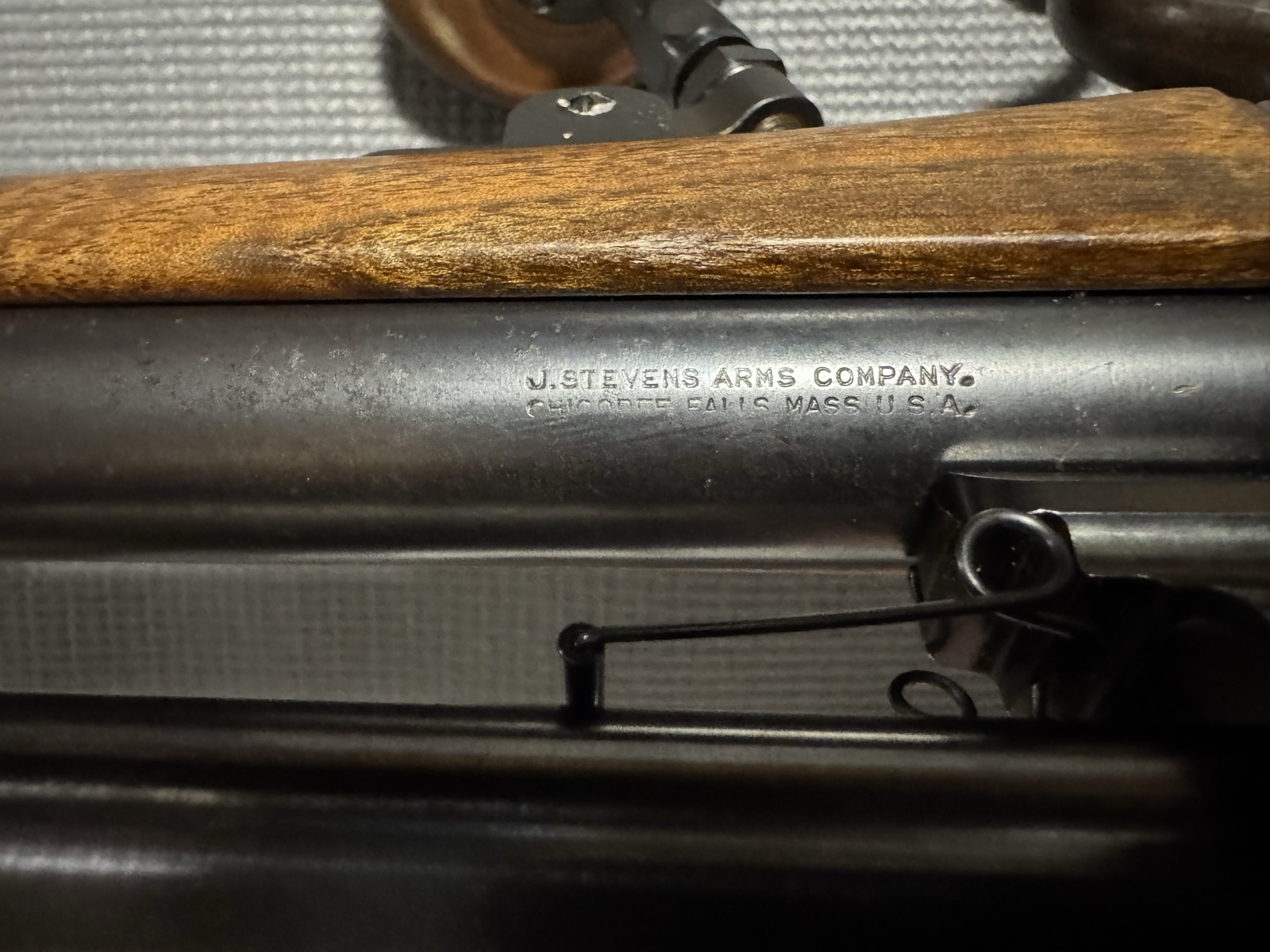
The barrel stamp "J. STEVENS A. & T. CO. · CHICOPEE FALLS, MASS. U.S.A." (often with
"PAT. APR. 17. 94") means it left the factory before the name changed in July 1916.
A "Trademark-Stevens" style barrel stamp first appears in the 1914 catalog, so a rifle carrying it is
1914 or later.
The 44½ carries its own serial series, separate from the 44. Collectors have logged numbers from the
low hundreds to a little past 13,000 across the 1903–1916 run, so the serial places a rifle early, middle, or late.
So what does this one say?
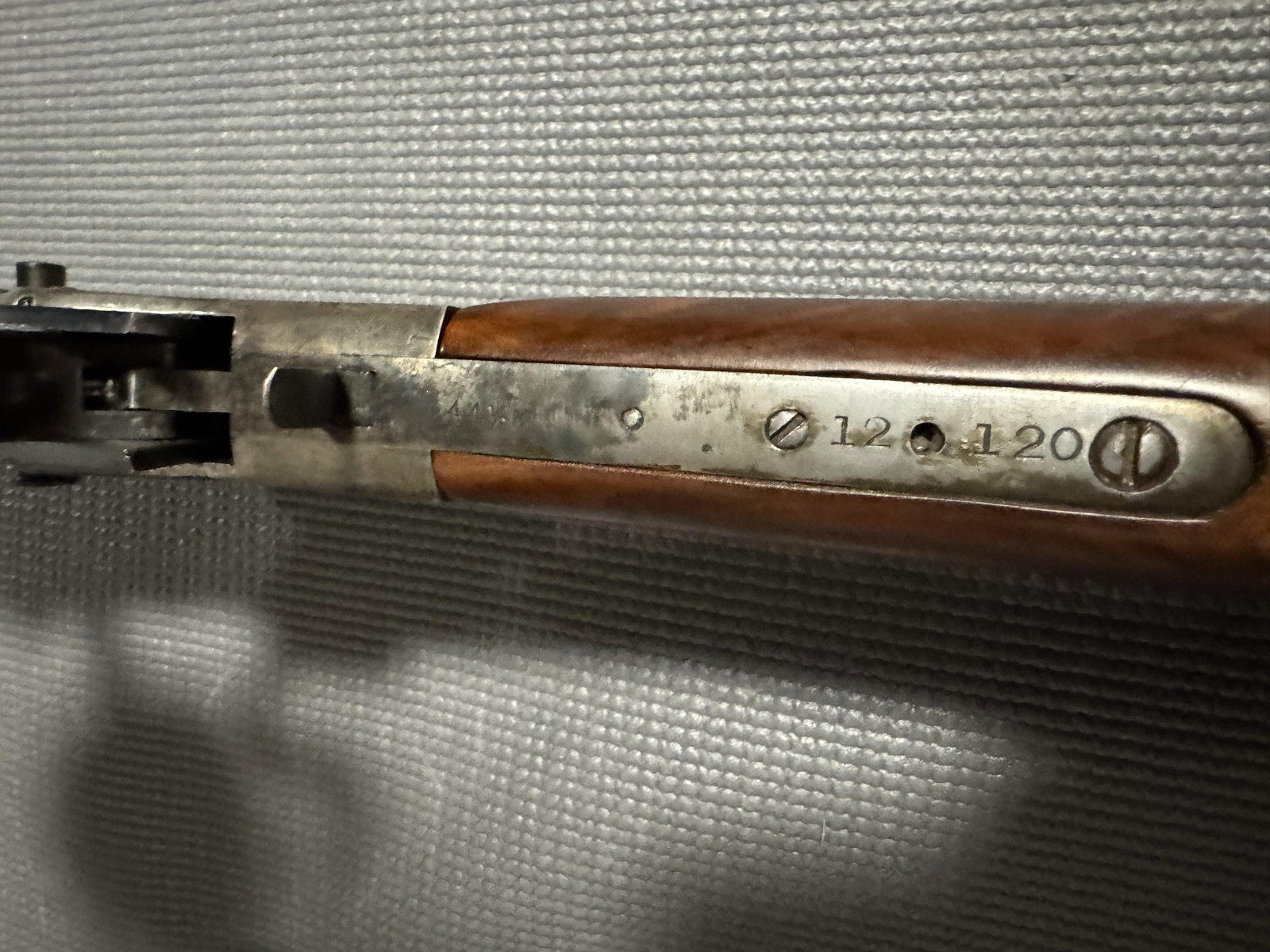
Fig. 4The barrel address: J. STEVENS ARMS COMPANY · CHICOPEE FALLS, MASS. U.S.A. — not "Arms & Tool Co."Fig. 5The serial on the lower tang reads 12120; the tang also carries a 44½ model stamp (visible in the Gotchas section below).
Two things, and they agree. The barrel is stamped "J. Stevens Arms Company" — the name the firm
took on July 1, 1916, after the Westinghouse purchase — rather than the "Arms & Tool Co." stamp
that every earlier 44½ carries. And the serial, 12120, sits near the very top of the 44½ series,
where collectors' surveys run out a little past 13,000. Both point the same way: this rifle is one of the last
44½s Stevens built, from the final months of production in 1916, when the Chicopee Falls
plant was already turning to war contracts. The alternative reading — a late-series receiver fitted
with a factory barrel marked after the name change — ends in the same place: 1916 or just after. Either way, this is
an end-of-the-line 44½, built as the Schuetzen world it was made for was about to close.
What Schuetzen looked like then
When this rifle left Chicopee Falls, American Schuetzen shooting was at full flood. The National
Schuetzenbund had organized in New York in 1894, and its Bundesfests — the third at Shell Mound Park
outside San Francisco in 1901 with $7,500 in prizes, the fourth in New York in June 1904 — drew shooters
from across the country to the 200-yard offhand line on the German ring target. In Manhattan the
Zettler brothers' gallery on West 23rd Street ran its famous indoor championships every winter from
1899 to 1918. And the records were falling: in 1904 Harry Pope posted six 97s and twenty-one 96s out of 100 at 200
yards offhand, Dr. W. G. Hudson shot a 99, and Pope took the Election Day match at Jersey City. A man with a Stevens
44½ and a good barrel could stand on that line next to anyone.
Then the war came. Anti-German feeling grew from 1914, and when the United States entered the war in
1917 the Schützenvereine all but stopped. Clubs dropped their German names or disbanded,
Prohibition in 1919 finished off the festival side, and Stevens had already stopped building the 44½ in 1916. The
rifles went into closets. More than a century later, one of them came out of a closet, went up for sale online, and
became mine for $450.
Why I Like It
It fits — and some Stevens traits are tough to beat
Let me be clear about where I stand. I own Ballards, and the Ballard is a unique and very wonderful rifle in its own
right; the other classics have their devotees for good reason, and I'd happily own more of them. But some of the
traits of this Stevens are tough to beat, and the first is the simplest: the rifle that fits you will outshoot the
rifle you wish you had. This 44½, in its original state with the original stock configuration, fits me
surprisingly well. The Swiss buttplate hooks under the arm, the wrist lands where my hand wants to be, and my
eye comes to the sight without hunting. That's not something a price tag buys. It's something you find out the first
time you shoulder the gun.
The palm rest
The rifle came without one. I found a palm rest on eBay for $60 and installed it myself — and it
makes the gun that much steadier. For offhand shooting, where the whole game is holding a heavy rifle still on
your hind legs for one perfect shot, the palm rest is the single best dollar-for-dollar upgrade there is.
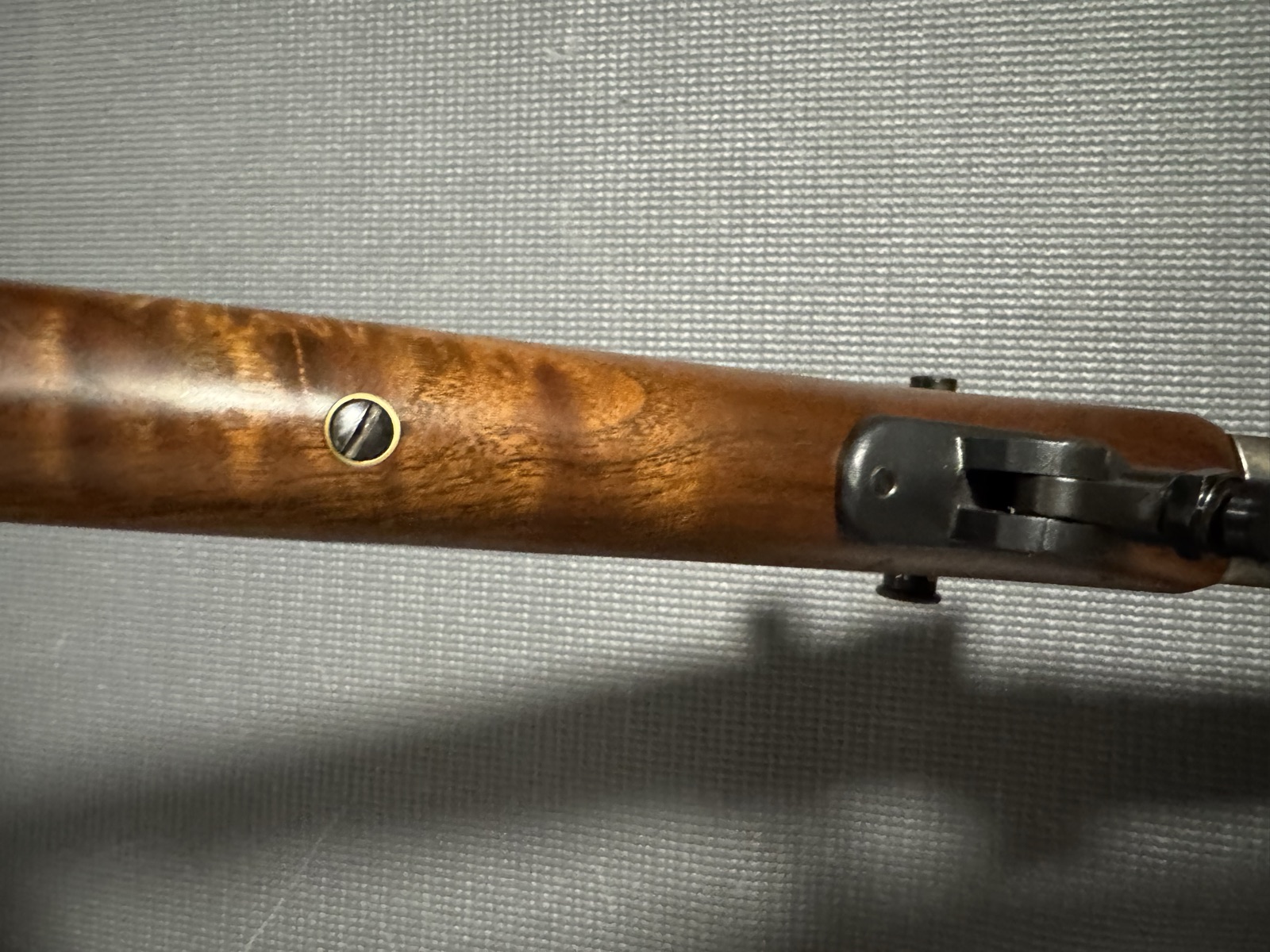
Fig. 6Under the forend: the palm-rest base and its mounting hardware, with the escutcheoned screw ahead of it. $60 on eBay, fitted at the kitchen table.
The price
$450 for the rifle and $60 for the palm rest: $510 all told, not
counting the scope. That buys you into a rifle that was built to shoot 200-yard offhand matches 115 years ago and
still can. Compare what a modern reproduction action alone costs, or what a complete Schuetzen-grade original brings
at auction, and the math speaks for itself. The money you don't spend on the rifle is money for a scope, a
mold, and ammunition — the things that actually put points on the target.
What
Recent money
Plain original 44½, .22 LR
About $700–$1,200 at online auction in 2025
Original 44½ Schuetzen with period scope
Auction estimates $1,600–$2,500 (2023)
Stevens-Pope 44½, .33-40 Pope Model
$6,600 at auction (2021)
New CPA reproduction 44½ action alone
About $1,650–$1,700
This rifle, with palm rest
$510
The barrel
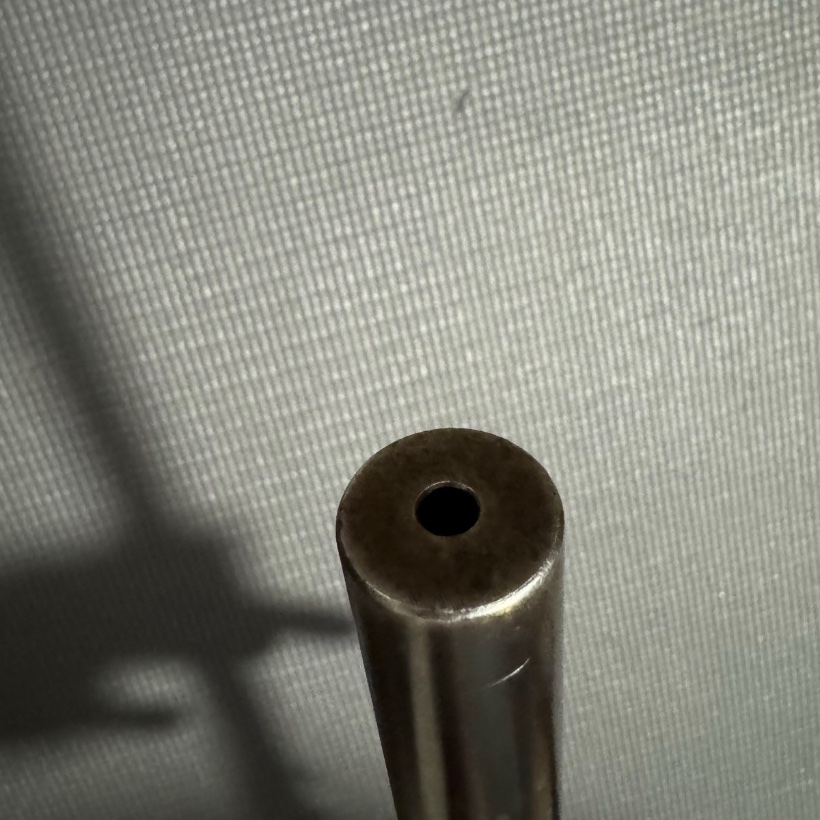
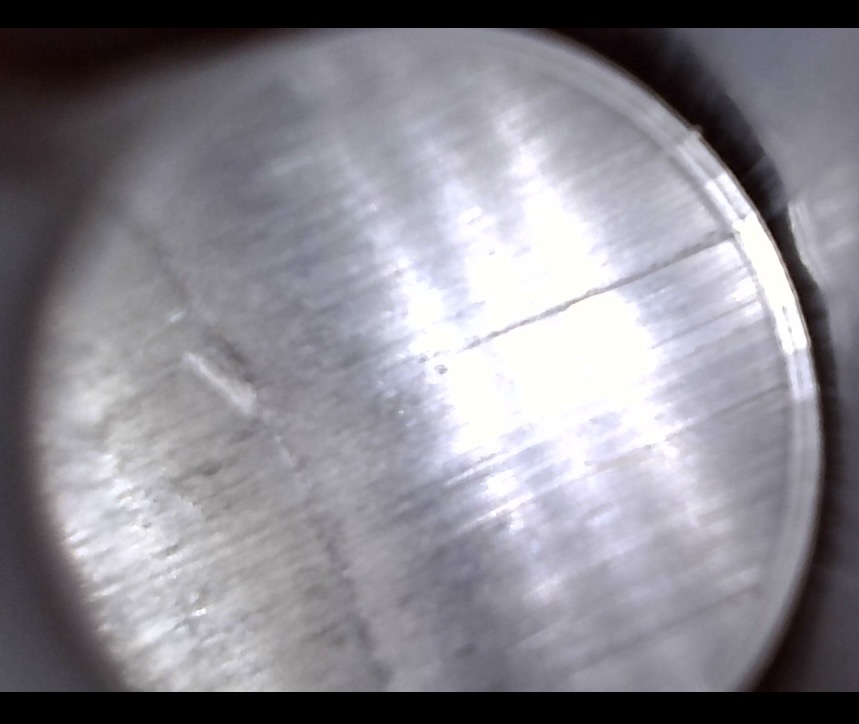
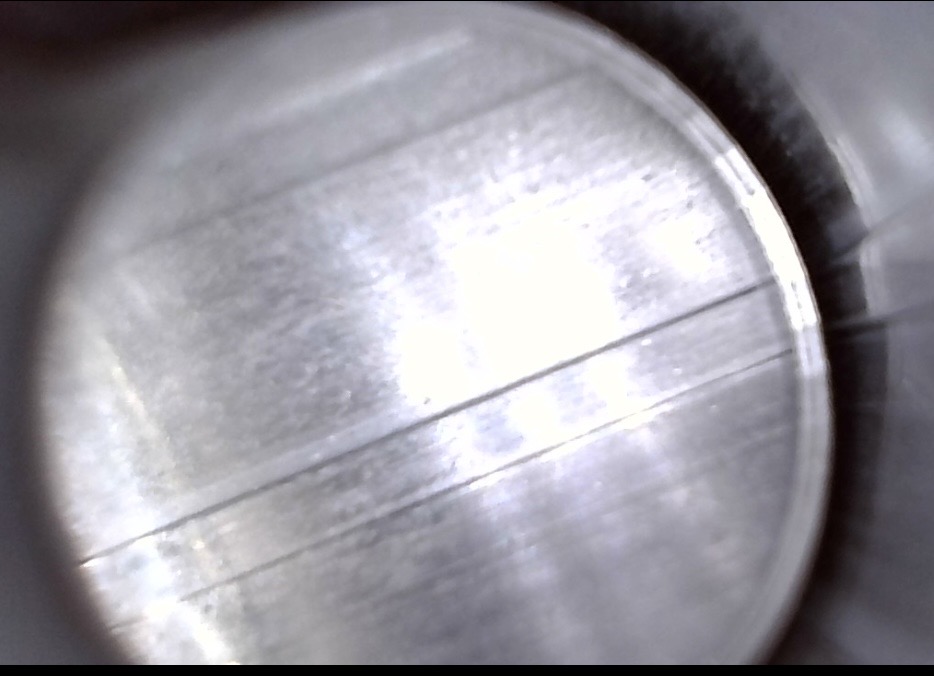
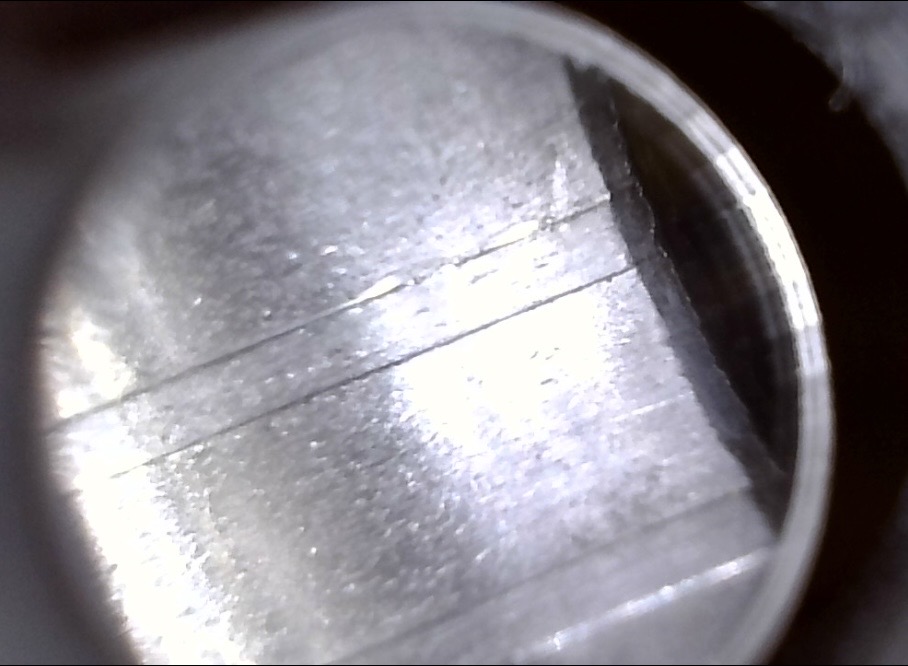
This is the original barrel, and no, it has not been relined. The bore photos
coming below make this purchase look even more insane than the price does. I've shot groups at 50 feet
with ordinary CCI high-velocity Long Rifle ammunition that were literally one hole — shots stacked on
top of each other. And keep in mind that was through a 5× scope, not a 20× Unertl. A century-old
factory barrel, bulk ammunition, and a low-power glass, and it still shoots like that.
Fig. 7The business end: a clean, square crown on the original barrel after a century of use.
At the breech
Mid-length
Near the muzzle
Fig. 8Down the bore with a borescope: bright steel, sharp-cornered lands and grooves, and no pitting, from the chamber to the muzzle. This is the original 1916 barrel. Judge for yourself whether $450 was fair.
The wood
Look at that stock. This was not a top-of-the-line rifle when it left Chicopee Falls — the Schuetzen Special and
the Pope Model were the ones that came with "extra fancy" wood in the catalog, at extra-fancy prices. This is a
working grade, built in the last year of production, for a shooter rather than a showcase. And Stevens still put
walnut like this on it: deep, rolling figure through the whole butt, the kind of grain that moves
when the light does. That tells you something about how the company did business in 1916, when good walnut was
ordinary and the factory wasn't inclined to waste it. A century later, with the oil of a hundred match days in it,
it's prettier than it was the day it was made.
The straight wrist and the hooked Swiss buttplate are the original Schuetzen configuration, and they're the reason
the rifle fits the way it does. Nobody has "improved" this stock, and nobody should.
Fig. 9The buttstock: heavily figured walnut, a straight wrist behind the lower tang, and the hooked Swiss buttplate that locks the rifle under the arm for offhand work.
The extractor, and the "flick"
This is where the 44½ wins me over every time. The ease of operation is hard to overstate: no ejector
slipping past a case rim, no special tool to pry a case out of the chamber, nothing to fumble. Drop the
lever, the breech block falls, and right at the end of the stroke there's an extra flick that sends the empty
on its way. I have literally watched cases fly ten feet behind me. I love it.
And it matters more than it sounds. In my amateur opinion, the Schuetzen game is won in the seconds between
shots. Every second spent wrestling a stuck case, or spending brain power on how to get a case out, is a second not
spent breathing, relaxing, and preparing for the next shot. A rifle that clears itself and asks nothing of you is a
rifle that lets you shoot.
The 44½ extractor is cut for one cartridge, so a rifle that's been rebarreled or rechambered may carry
one that doesn't quite match. Blanks and finished extractors are still made today — a fixable problem, not a deal-breaker.
Fig. 10Breech open, from the shooter's end: the block is down and out of the way, the chamber mouth sits in plain view, and the extractor is right there ahead of it. Drop the lever and this is what you get — nothing to fish for.
No half-cock — and the hammer stays down until you say so
One more thing a newcomer should know about the Stevens, because it's different from what you'll find on some
other classics. There is no half-cock. Instead, a cam draws the hammer back out of the way as you
drop the breech block, and when you close the block again the hammer follows it and returns to its rest position.
Load, close, and the rifle is not cocked. Cocking the hammer is a separate, deliberate motion you make when
you're ready — and not before.
Compare the Winchester 1885 High Wall, to take the best-known example: work the lever and it leaves the hammer
back, in the firing position. That can be good or bad. For a new shooter — and this is purely a personal preference —
I think it's better to add cocking the hammer to my routine, and to know the gun is safe on the bench until I'm ready
to go to work. I have watched accidental discharges on the range, and the one that sticks with me was a High Wall
with double-set triggers: the shooter bumped the trigger getting settled on the gun, and it went off. On the Stevens,
that rifle would still have been sitting with the hammer down.
Fig. 11The breech in action. Watch the hammer: as the block drops, the cam draws it back out of the way; close the block and it follows home to rest. The rifle is not cocked until you cock it. And watch the end of the lever stroke — that flick is the extractor doing its job. Tap for sound.
It's easy to work on
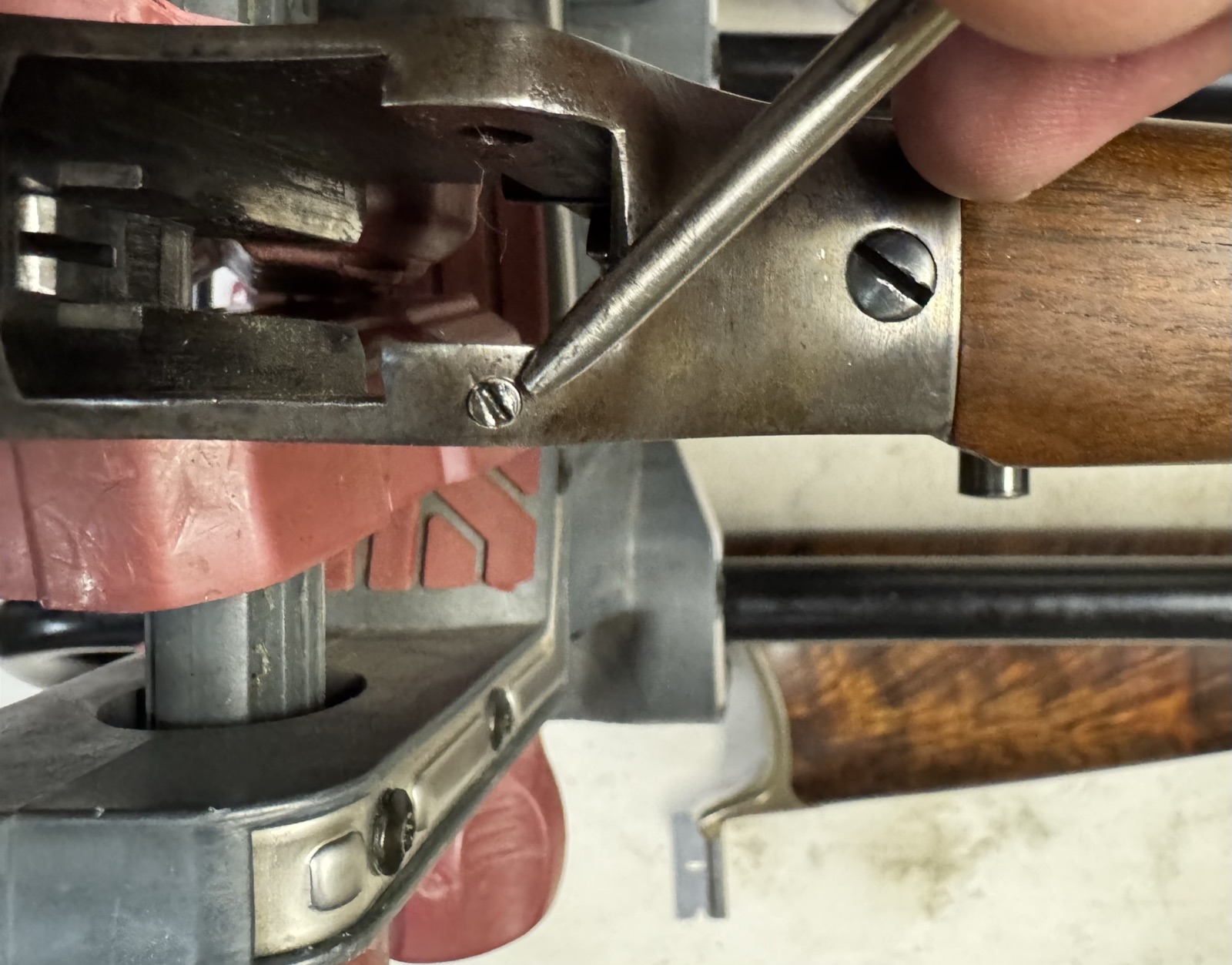
This is the 44½'s quiet virtue. Pull the lever pin and, with the lever swung forward so the link clears the lower
tang, the whole breech-block assembly drops out the bottom of the receiver. The barrel is a takedown and comes off by
hand. No special tools, no press, no gunsmith — which matters when you're learning the rifle, chasing a load, or
cleaning it the same night.
The barrel comes off nearly as easily, and that's another feature the Stevens models have over most of their
rivals. One screw on the underside of the receiver — the barrel lock screw, or just the "barrel screw"
in the old Stevens parts lists — holds the barrel in the frame. Back it out until you can turn it with your fingers,
then hold the action and unscrew the barrel by hand. It's a real convenience when a barrel needs a heavy cleaning or a
lapping job, because you work on the barrel alone instead of the whole rifle. One tip from the
Stevens old-timers: if a barrel is tight, pull the breech block and extractor, then put the block back in before you
twist — it keeps the receiver walls from springing.
Fig. 12The barrel lock screw, under the pointer, on the bottom of the receiver just ahead of the forend. Back it out and the barrel unscrews by hand.
Getting the stock off is just as simple: two wood screws, and the buttstock comes away from the action.
That's it. With the stock off, the hammer spring and the whole lockwork are right there in front of you — nothing
hidden, nothing that needs a diagram.
Fig. 13Two wood screws later: the action with the stock off. The long flat hammer spring runs back along the tang, and everything that makes the rifle fire is in view.
The One Con: The Trigger
In fairness, there is one. The trigger on the 44½ is heavy. I have polished and worked on this one
to the limits of what I'm willing to do myself, and about the best I will ever get it is two pounds.
A good gunsmith could take it down into the one-pound to one-and-a-quarter-pound range, and that's
where a Schuetzen trigger belongs. Two pounds is shootable. It is not what the rifle deserves.
A story to put it in perspective. Earl Hines — one of the best shooters out there, and I'd argue
one of the best in the world — shot this exact rifle recently, and I had to chuckle a little. He held the gun ever so
steady. I watched his every move, trying to understand what makes him what he is. And after what felt like an
eternity, he finally mumbled something to the effect of "any time now," waiting for the break. The trigger
at that time was well over three and a half pounds. The best in the world was standing there holding my rifle on the
target, waiting on a trigger that wouldn't let go.
What I can say for the Stevens family is that the older Model 44's trigger is much easier to polish,
and much easier to get down to even a one-pound pull. The 44½ got the stronger action; the 44 kept the sweeter
trigger. If you buy a 44½, budget for a trigger job and consider it part of the price.
There is a better answer than polishing, and it's only available for the 44½: CPA Rifles makes a
double-set trigger for the 44½ action — not for the 44 — for about $200. Set the rear
trigger and the front one breaks at ounces. In my opinion it is worth every dollar, and it's the next line on this
rifle's budget sheet.
The Gotchas
Every old rifle has them. The 44½ has a short, well-known list, and then every individual rifle has its own.
The known ones first:
Firing pins break. The chronic 44½ complaint — the pin meets the block at a steep angle and an
unrelieved tip shears instead of retracting. Never dry-fire a 44½. Old-timers carried spares; new
pins are about $20 today.
Loose block or lever. The block face should bear on the barrel with a hair of interference; a
tension screw in the block takes up wear.
Cracked or repaired wrist. A century of hooked buttplates and offhand recoil finds the thin
wood behind the tang. Look there first.
Extractor mismatch, as above, on rebarreled guns.
Parts are not a problem: CPA Rifles keeps some thirty original-pattern 44½ parts in stock. Now, the ones I found on
this one — and what to look for before you send money for yours.
Gotcha #1 — the hammer tension screw
This one is important. If the rifle starts misbehaving — soft hits on the rim, a misfire here and
there — this screw is the most likely culprit. It sets the tension on the hammer spring, and over time, even on a
.22, it backs out. As it does, the spring tension lightens and the striking force drops with it.
The rifle doesn't tell you; it just starts leaving light dents in rims.
The fix is simple. Turn the screw clockwise to bring the tension back up, then retest at
the range — and keep going until the striking force is clearly good again: no misfires, and the groups
back to consistent. A dab of light-duty thread locker on the screw will help it stay put.
Fig. 14The hammer tension screw, under the pointer, on the lower tang just ahead of the serial number. Note the 44½ model stamp on the tang beside it. When a 44½ starts misfiring, start here.
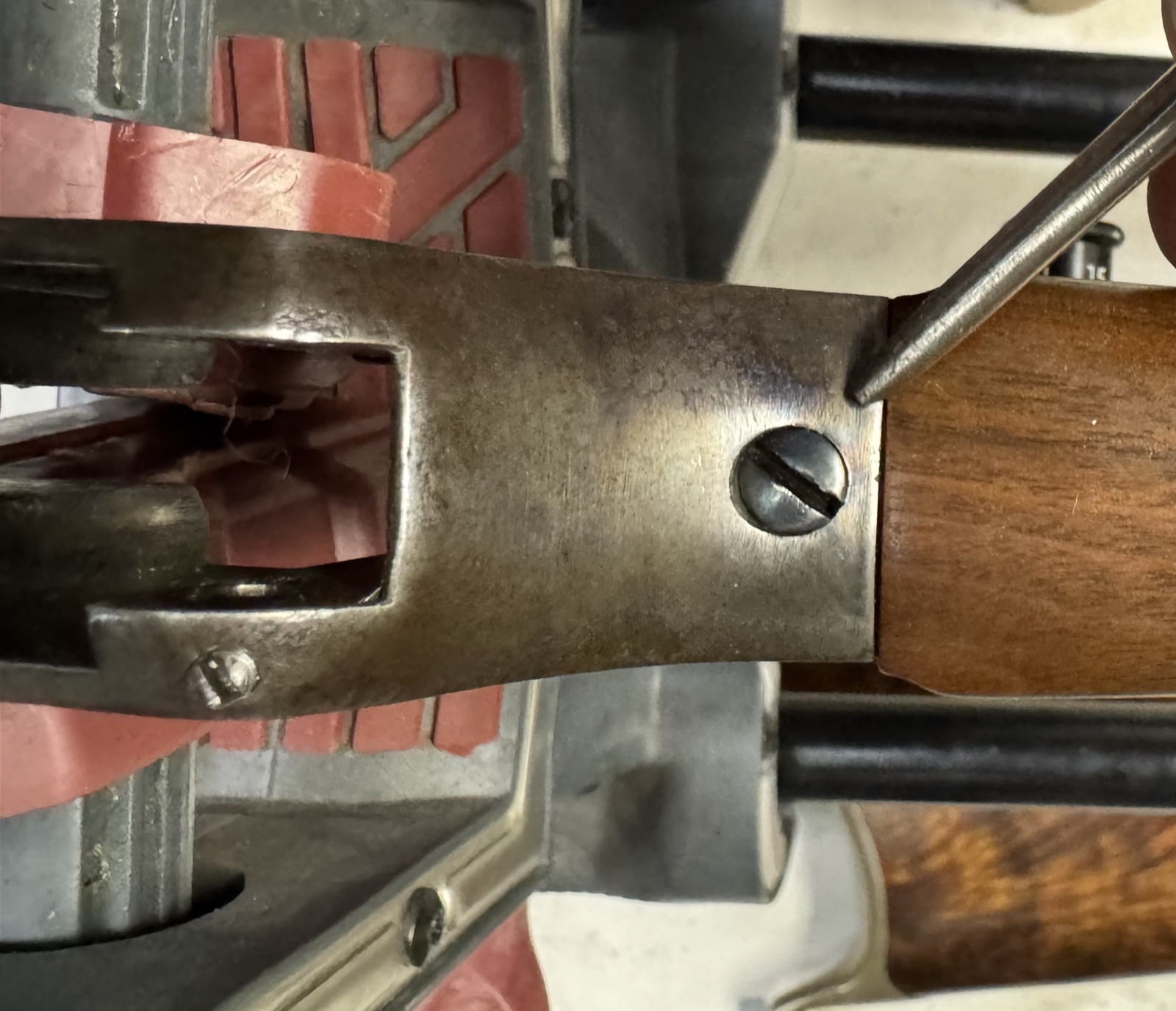
Gotcha #2 — the lever pivot pin lock screw
Easy to miss, and expensive if you do. The lever pivots on a pin through the receiver, and that pin is held in
place by a small lock screw at the rear of the receiver, just ahead of the stock. Its whole job is
to keep the pin from sliding out.
The newcomer's mistake is to put a punch on the pin and start tapping. If you try to drive that pin out
without loosening this screw first, you will damage the screw and quite possibly the pin as well. Loosen
the lock screw, then the pin pushes out — and with it the breech-block assembly drops free, as described above.
Screw first, pin second, every time.
Fig. 15The lever pivot pin lock screw, under the pointer, with the action open. Back it off before you touch the pin.
The Budget Sheet
Running total of what it has cost to put this rifle on the line, updated as the build goes.
Stevens 44½, scope blocks fitted, no scope, no sights, no palm rest (online)$450.00
The scope on it now is a Montana Vintage Arms 5× tube scope, which I'm keeping out of this build's total — it's
the one piece that moves from rifle to rifle. Where it goes from here: a mold, a load, and time on the line. Each step will get its own
entry in Amateur Hour.
The point isn't that cheap is good. The point is that this rifle is good — and it was cheap.
Sources & Further Reading
Historical statements above are drawn from the references below and from collector consensus; anything
marked in red is disputed or unverified. See also The Rifles & Their Makers on this site.
 At the breech
 Mid-length
 Near the muzzle